E-commerce agency Munich
An e-commerce agency that already made the platform decision
We spent 14 years building online stores on whatever the client had, and in 2020 we stopped and specialised on Shopify. This page is about that decision: how we would help you make yours, what we do once it is made, and the cases where our answer is that you should not hire us.
How we work as an agency
What a specialised e-commerce agency does differently
Full-service agencies sell breadth: every platform, every channel, every discipline. We sell the opposite, and the trade is worth understanding before you brief anyone.

The platform question, answered before the project
Shopify, Shopware, a headless build or staying where you are. We will tell you when your current system is fine and the real problem is merchandising or logistics. An agency that never recommends doing nothing is not advising you, it is quoting you.
Depth on one platform instead of a page on ten
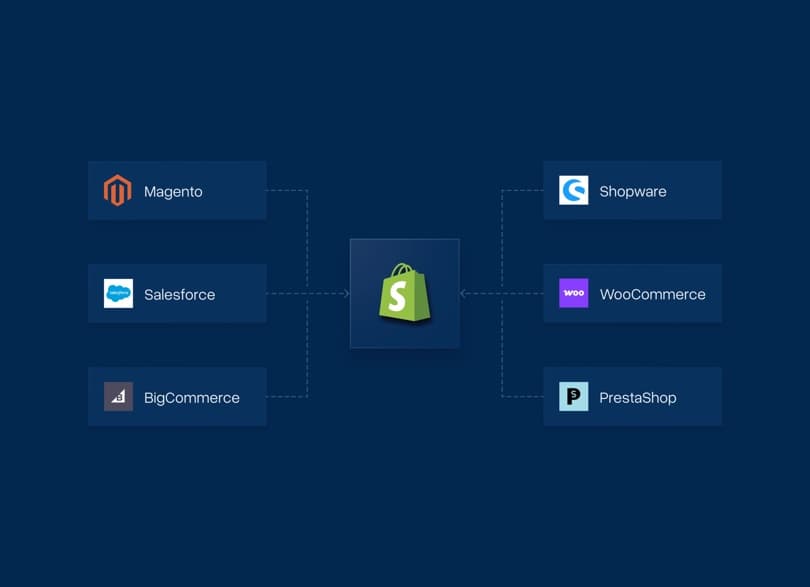
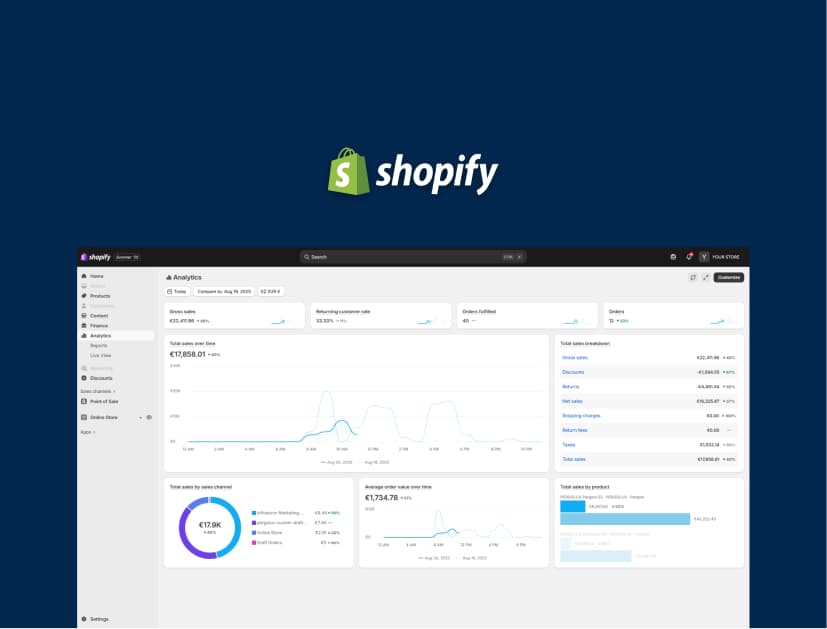
Since 2020 every project we run is Shopify. That means no discovery detours while someone learns your stack, and it means we know the platform's limits as well as its features. It also means we are the wrong agency if you are committed to staying on Shopware or Magento.
The German back office, not just the storefront
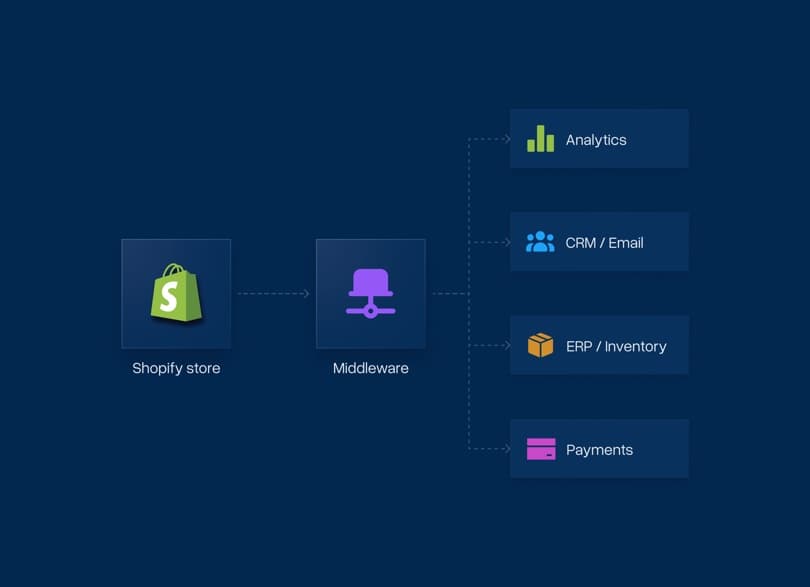
Invoice payment, DATEV, DHL and Packstation, DSGVO, ERP and PIM connections, B2B pricing. Storefronts are the visible part and rarely the hard part. The projects that go wrong in this market go wrong where commerce meets accounting and logistics.
Built to be found, by people and by machines
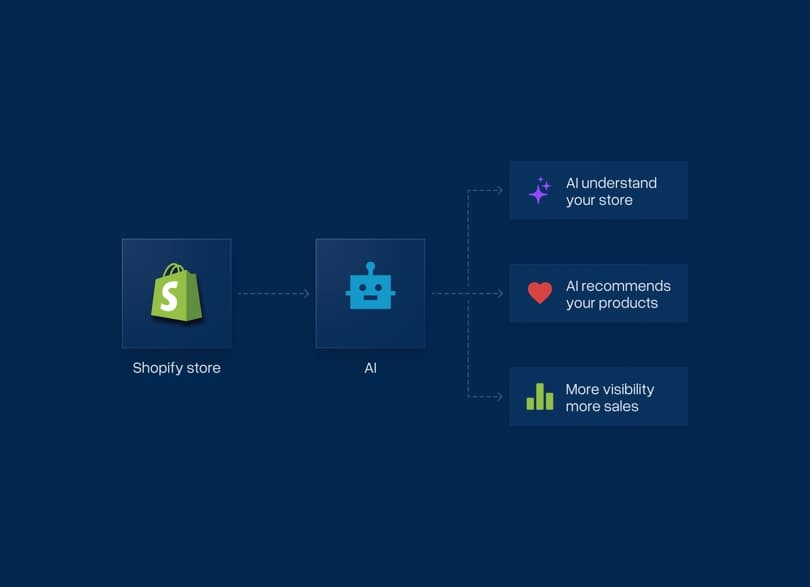
Structured data, clean feeds, server-rendered content and markdown mirrors so AI answer engines can read your store as well as Google can. This site runs the same setup it recommends, which is the only credential worth anything on this topic.
How a project runs
From first call to a store your team runs
The same four stages whether the job is a replatform, a new build or fixing something that is not converting. Only the paperwork scales.
A call that sorts the problem
What you sell, what is not working, what better looks like. We come out of it with a view on whether the project is real, roughly how big it is, and whether we are the right people. Sometimes the answer to the last one is no, and you get told.
Scope and a written offer
Each work block named and priced on its own: strategy, design, build, migration, integrations. You can strike blocks before signing. An offer that is one line with one number has already decided every open question in the agency's favour.
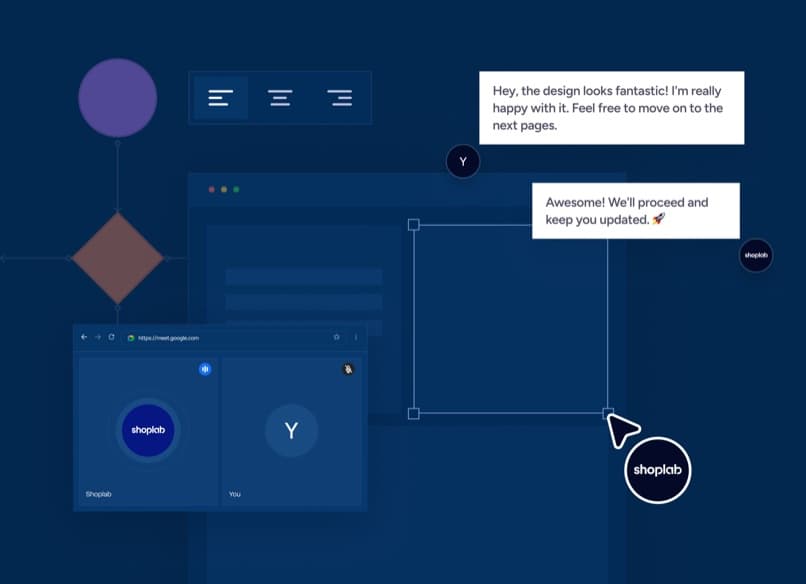
Build in the open
Design in Figma with real content, development on a preview you can visit, weekly check-ins against the scope document. Changes get quoted before they are built, which keeps scope drift visible instead of turning up in the final invoice.
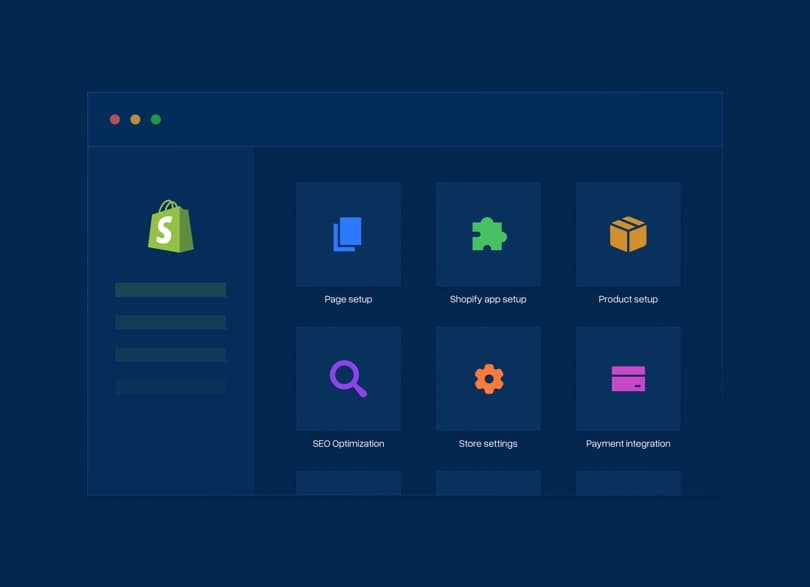
Launch, handover, and then your choice
QA, a documented store, and a walkthrough with the people who will run it day to day. Ongoing support is priced as its own monthly scope and never assumed into the project. A store your team cannot operate without us is a failed handover, not a retainer.
Trusted by brands worldwide
Brands across DACH and beyond that we build and scale
Fashion, furniture, jewellery, beauty, B2B. Six of these projects are documented in full in our case studies, with the client named so you can check them.






E-commerce agency FAQ
What brands ask before choosing an agency
Platform choice, what full-service actually means, working with a Munich agency remotely, and where we are the wrong fit.


Comparing agencies?
Ask us the awkward questions.
Four things, in the order they matter: decide what to build and why, design it, build it, then keep improving it after launch. Agencies differ mostly in which of those they are genuinely good at. Ask any agency which of the four they would happily hand to someone else - the honest ones have an answer.
Yes, and deliberately. If you have already chosen Shopware, Magento or a headless stack on another platform, we are not your agency and we will say so in the first call. If the platform is still open, or you are unhappy where you are, the specialisation is the reason to talk to us rather than a reason not to.
Catalogue complexity, B2B requirements, the systems you already run, your team's capacity to operate the thing, and honestly your budget. Most mid-market German brands land on Shopify, which is why we specialised. Some should not - very deep configurable products, unusual regulatory needs, or an in-house team already productive elsewhere.
The build works remotely and most of ours partly do. Local earns its keep in two places: the workshop where scope is decided and the week around launch. We are in Kirchheim near Munich and available in person for both, which for a DACH brand is usually the right amount of local.
It depends on scope, and any number before scoping is marketing. We scope first and free, then price each block individually so you can compare us honestly against whoever else you are talking to. Our agency-costs page explains the mechanics without pretending a rate card would help you.
Yes, and it is a large share of what we do. We start with an audit of the theme, the app stack and the integrations, and we tell you what is salvageable and what is cheaper to rebuild. Inheriting somebody else's architecture without auditing it first is how the second agency repeats the first one's mistakes.
Related
Where to go from here
The specific work behind the agency.
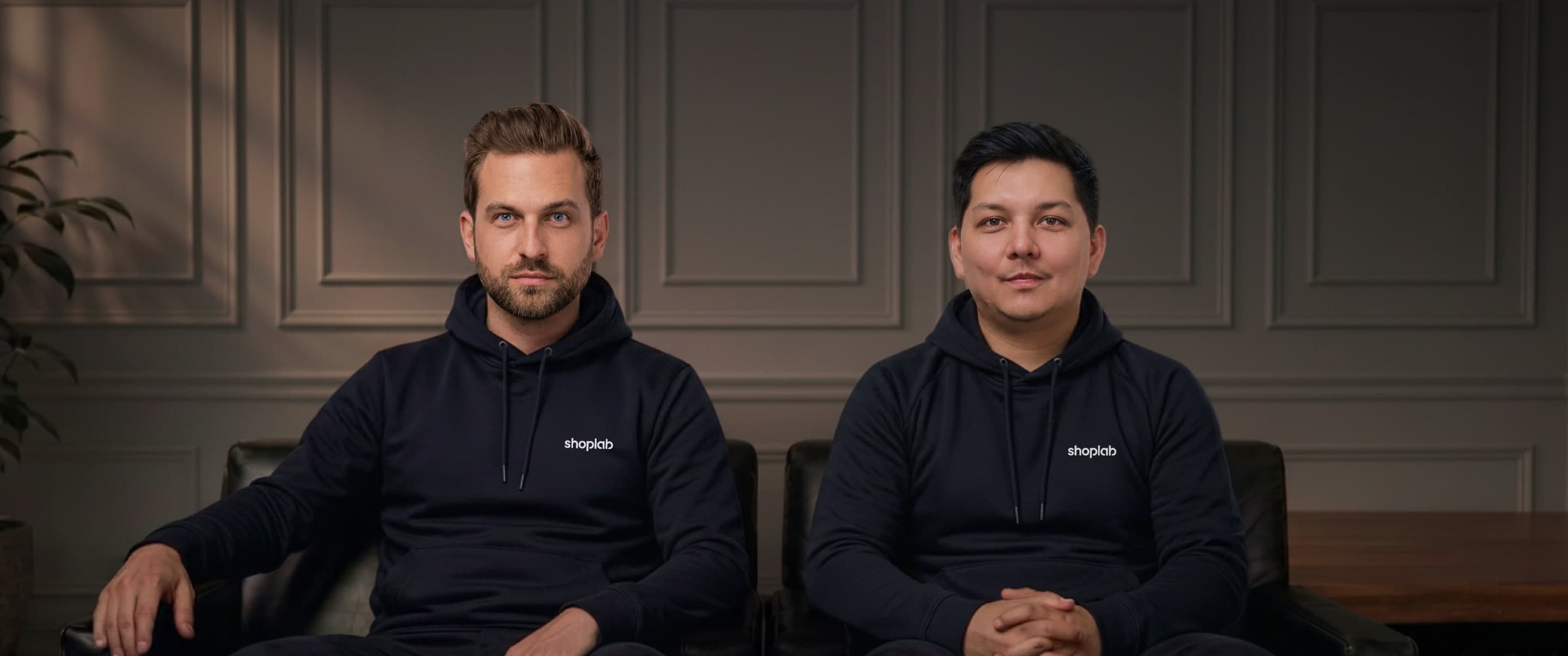
Martin Winkler
Co-Founder & CEO
Mark Chang
Founder & CTO