Skip to content
Back

Service information

Strategy & consulting

Build your Shopify store on a strong foundation with strategic guidance tailored to your business goals.

What you get with shoplab compared to a typical agency and freelancers
What you getshoplabTypical agencyFreelancers
Strategy & DiscoveryYes: IncludedPartial: VariesPartial: Limited
UX/UI DesignYes: CustomYes: IncludedPartial: Basic
Shopify DevelopmentYes: Custom-builtYes: IncludedYes: Included
Scalability PlanningYes: Built inPartial: Project dependentPartial: Rarely
Performance OptimizationYes: IncludedPartial: OptionalPartial: Extra
Conversion-Focused ApproachYes: Every projectPartial: SometimesPartial: Rarely
Post-launch SupportYes: Ongoing partnershipPartial: RetainerPartial: Project ends
Dedicated TeamYes: SpecialistsYes: TeamPartial: Solo
Documentation & HandoffYes: CompletePartial: BasicPartial: Limited
Long-term Growth FocusYes: Continuous optimizationPartial: On requestPartial: Not typical

Who We Work With

The best results come from the right partnership

We work with businesses that value strategy, collaboration, and long-term growth. When we're aligned, we build better Shopify experiences together.

This service is ideal if

You're ready to build with a clear strategy before execution.

  • You're committed to long-term success
  • You value strategy before execution
  • You want a scalable Shopify store
  • You value data over assumptions
  • You're ready to invest thoughtfully
  • You care about customer experience
  • You need expert Shopify guidance

This service may not be right if

You need immediate results without planning or research.

  • You're looking for the cheapest option
  • You need a store tomorrow
  • You only need quick fixes
  • You expect design without strategy
  • You're shopping on price alone
  • You're avoiding long-term investment
  • You don't need ongoing optimization

Common Challenges

The problems we solve before they become expensive

Most Shopify issues aren't caused by poor design - they're caused by decisions made without a clear strategy. Here's where businesses usually lose momentum.

Revenue has plateaued despite increasing traffic or marketing spend. We identify what's limiting growth and prioritize the improvements with the greatest business impact.

Without clear data or a strategic roadmap, it's easy to invest in features that don't move the business forward. We replace assumptions with measurable priorities.

Visitors browse but don't buy. We analyze the shopping experience to uncover friction, improve usability, and increase conversion opportunities.

Features continue to pile up without a clear direction. We help prioritize initiatives based on customer value, technical effort, and expected business impact.

As your business grows, performance issues, technical debt, and inconsistent experiences become harder to manage. We create a scalable foundation for future growth.

Markets evolve quickly. We analyze competitors, customer expectations, and industry trends to identify opportunities your store may be missing.

Whether you're rebranding, migrating to Shopify, or introducing new products, we develop a strategy that reduces risk and supports a successful launch.

Marketing, design, and development all require investment - but without clear priorities, it's difficult to know what's actually driving growth. We help focus resources where they'll deliver the greatest impact.

As your company evolves, your Shopify store may no longer communicate your value or support your goals. We align your digital experience with your current brand, customers, and growth strategy.

Disconnected apps, outdated workflows, and technical limitations create unnecessary complexity. We evaluate your Shopify ecosystem and recommend a simpler, more scalable approach.

Case studies

From business challenges to measurable outcomes

Discover how strategic consulting helped ambitious Shopify brands make smarter decisions before investing in execution.

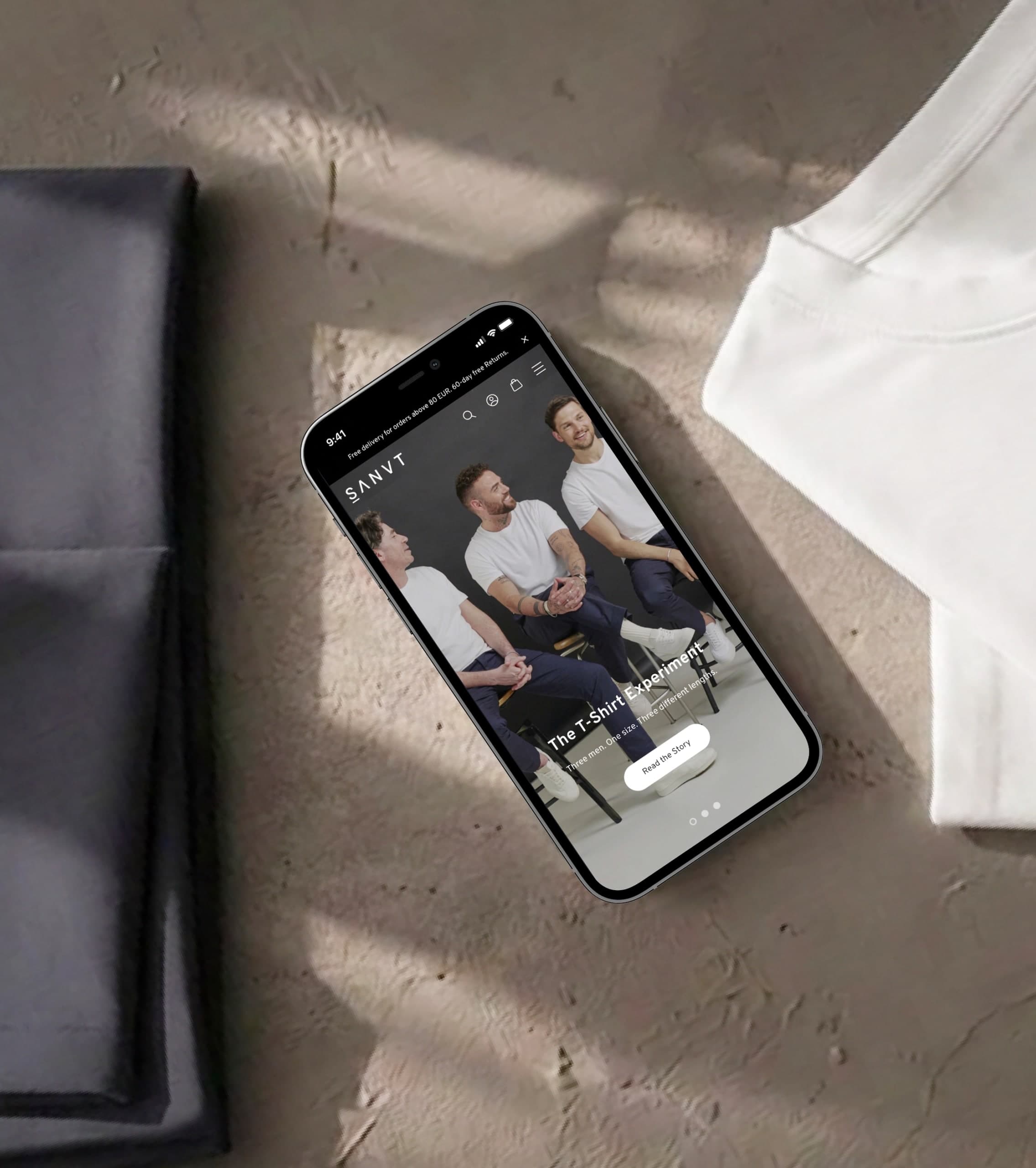
SANVT's Shopify store on a phone next to folded premium t-shirts

Sanvt.comFashion

Building a premium shopping experience for growing modern essentials brands

Custom Design, Theme & App Development + Migration

Problem

SANVT sells premium fashion - but their WordPress store was undermining the brand at every touchpoint. Persistent bugs, slow load times, and zero scalability meant every technical issue was eroding the premium experience they'd worked hard to build.

Approach

We migrated the store fully to Shopify and built a custom UI/UX design centred on brand and performance. Configured to Shopify best practices from the ground up - fast, stable, and conversion-optimised. The result: a store that finally matched the quality of the product inside it. Revenue doubled.

Conversion rate
+80%
Total revenue
+100%
The Enibas jewellery store on a phone surrounded by soft fabrics and dried flowers

enibas.comJewelry

Migrating Enibas to Shopify with a premium shopping experience built for future growth

Custom Theme, Bundle Builder & Data Migration

Problem

Enibas sells luxury jewellery. Their CraftCMS storefront wasn't built for commerce - riddled with limitations that made daily operations difficult and left customers with an experience that didn't match the product. First impressions were costing them sales.

Approach

We migrated the store to Shopify with a seamless Lightspeed integration - keeping existing operations intact while building on a proper commerce foundation. A high-performance custom theme focused on UI/UX and branding, plus a custom Anam Builder configurator that lets customers personalise their pieces before buying. Luxury product, luxury experience - finally aligned.

Conversion rate
+20%
Total revenue
+15%
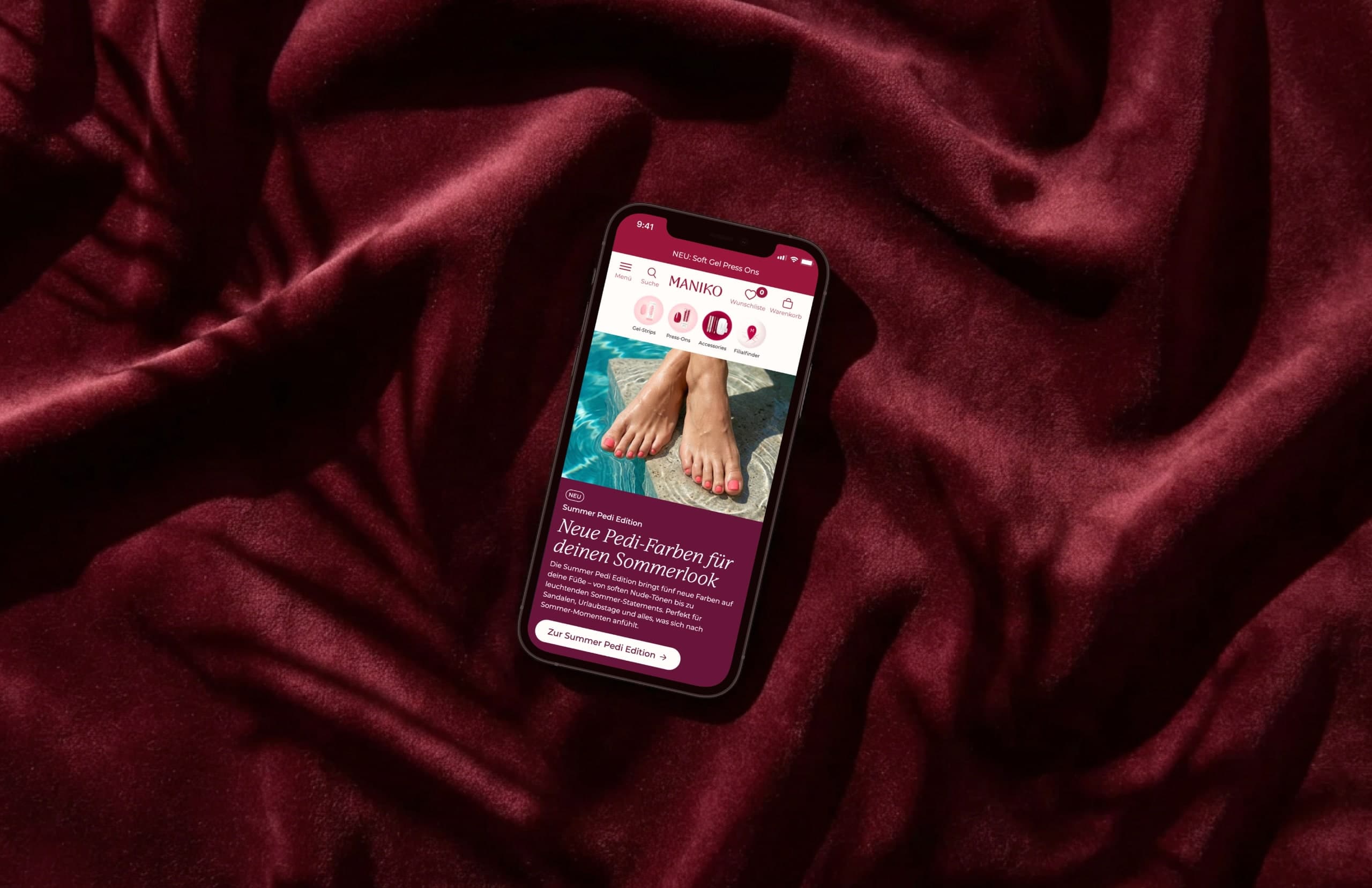
The Maniko Nails store on a phone lying on dark-red velvet

maniko-nails.deNail Care

Building the commerce infrastructure that powers Maniko Nails' rapid growth

Custom Theme, Apps and API Integrations

Problem

Maniko had a product customers loved - and a store that couldn't keep up. Demand for customisable starter kits was high, but their existing setup had no way to support the personalisation experience their customers expected. Conversion potential was being left on the table every day.

Approach

We built a custom Vue.js theme with advanced filtering and a full starter kit configurator - giving customers the exact build-your-own experience they were asking for. Every UI/UX decision was made with conversion rate in mind, turning product discovery into a seamless path to purchase.

Conversion rate
+50%
Total revenue
+60%

More services

Explore other services that complement your strategy and help your Shopify store grow with confidence.

View all Services

Frequently asked questions

Got questions? We've got answers

We've gathered the most asked questions with answers to help you better understand our services.

Portrait of a shoplab team member

Still have a question?

Let's have a call and clear things up.

Yes. We have worked exclusively with Shopify and Shopify Plus since 2020, and turning down other platforms is what got us here. The trade is deliberate: a team that sees the same platform every day knows which problems have a native solution, which need an app, and which need custom code - so less of your budget goes into rediscovering that. It also means we follow Shopify's own conventions instead of porting patterns over from Magento or WooCommerce, which is what keeps a store upgradeable after we hand it over.

Strategy & consulting, custom Shopify theme development, custom app development, store migrations, UX/UI design, integrations & middleware, ongoing store management, and AI e-commerce readiness. Most projects combine three or four of those: a migration usually arrives with an ERP integration and a redesign attached, and a redesign usually surfaces a performance problem. Everything runs through one team, so a design decision and its development consequence get settled together rather than negotiated between two agencies.

Absolutely, and it is one of the most common ways clients start with us. We audit the current store first - conversion path, page performance, and the templates that carry the most revenue - then redesign against what the audit found rather than against a moodboard. Your products, customers, orders and URL structure stay where they are, so rankings and store data are not at risk. Redesigns can also ship in stages: the pages that sell first, the rest afterwards, so you see the effect before the whole budget is committed.

Yes, from scratch rather than by reskinning a marketplace template. A custom theme means the sections your merchandising team actually needs, editable in the theme editor without a developer, and no inherited code for features you will never use. That last part is the performance argument: off-the-shelf themes carry the union of every use case they were sold for, and you pay for it in Core Web Vitals on every page load. We build against your catalogue and your content model, then hand over documentation so your team can run it.

Yes - WooCommerce, Magento, Shopware and other platforms, in a staged, low-risk process. Products, variants, customers and order history come across, and every indexed URL gets a mapped 301 so the rankings you already earned survive the move. What decides the timeline is rarely catalogue size: it is data structures with no direct Shopify equivalent (bundles, configurable products, customer-specific pricing) and the systems your store talks to. We inventory both before a cutover date is set, which is why our migrations do not end with a redirect list written the night before launch.

It depends on scope: focused improvements often take 4-6 weeks, while full custom builds or migrations typically run 8-16 weeks. A store moving onto a configured theme is usually live in 4-8 weeks; a fully custom storefront runs closer to 10-16. You get a timeline with defined milestones before we start, and those milestones are staged releases rather than one launch date at the end - so a delay in one area does not push everything behind it. What moves a timeline most is late scope additions and integrations nobody inventoried at the start.

Always. We design mobile-first because that is where most e-commerce traffic sits, and where most of the conversion loss happens. Every store is tested on real devices rather than a resized browser window, and measured against Core Web Vitals - largest contentful paint, interaction latency, layout shift - before it goes live. Image handling, font loading and third-party scripts get the most attention, because apps are usually what turn a fast theme into a slow store. Performance is a launch requirement here, not a follow-up ticket.

Yes. Store management plans cover Shopify and app updates, iterative improvements, testing and technical support, on a monthly scope you can adjust as priorities change. Most stores need the first weeks after launch more than they expect: real traffic finds edge cases staging never produced, and the analytics only start telling the truth once volume arrives. After that, ongoing work tends to be conversion iterations on the templates that carry revenue, seasonal campaign support, and keeping the theme current as Shopify ships platform changes.

Definitely, and we will say so when a rebuild is not the right call. We often work in focused iterations - a conversion audit, performance optimization, or redesigning the handful of templates that carry most of the revenue - shipped as staged releases with measurable outcomes instead of a big-bang relaunch. For a store that already converts this is usually the better economics: you keep what works, spend where the data points, and avoid the risk window a full replatform opens. A rebuild earns its cost when the underlying theme or data model is the actual constraint.

Book a free strategy call - about thirty minutes, and you keep whatever comes out of it. We ask what you run today: platform, catalogue structure, connected systems, and what should be better after the project. From there you get a written proposal covering scope, timeline and pricing, with named work blocks rather than one number. If the call shows that what you need is smaller than an agency project, we will tell you that too. It is a cheaper conversation for both of us than finding out in month two.

Read more questions
Mark Chang and Martin Winkler, the shoplab founders, in shoplab hoodies

Martin Winkler

Co-Founder & CEO

Mark Chang

Founder & CTO

Ready to build your Shopify growth strategy?

Get in touch