
About us
Designed for Growth. Built to Scale.
Our work goes beyond launching stores. We build scalable Shopify experiences from strategy to launch. Every decision is made with performance and scalability in mind.
How we work
Our approach to building scalable Shopify stores
We combine strategic planning, thoughtful design, and expert development into a clear process that builds Shopify stores ready to grow.
Audit
We review your Shopify store, customer journey, technology stack, and business goals to identify opportunities, uncover bottlenecks, and define the right direction before any work begins.
Strategy
Together, we prioritize opportunities, define user journeys, and create a roadmap that aligns every decision with your business objectives.
Design
We design intuitive Shopify experiences that strengthen your brand, improve usability, and create a seamless shopping journey across every device.
Build
We develop a fast, scalable Shopify solution using clean code, modern best practices, and seamless integrations that support long-term growth.
Launch
After thorough testing and quality assurance, we launch your store with confidence and provide ongoing support to ensure everything performs as expected.
Meet our team
The people you'll work with from strategy to launch
We're a team of Shopify strategists, designers, and developers working together to build thoughtful e-commerce experiences that help businesses grow.

Mark
Founder & CTO

Martin
Co-Founder & CEO

Andrey
Lead Fullstack Engineer

Jimuel
Lead UX/UI Designer

Matthias
Lead Frontend Engineer

Bindeep
Fullstack Engineer

Lawrence
Team & Product Manager

Karen
Frontend Engineer

Guesh
Project Manager

Patrick
Frontend Engineer

Rizza
QA Specialist

Andra
Sr. Project Manager
Trusted by brands worldwide
Great brands that we help build and scale their businesses
We believe strong client relationships deliver great results, helping businesses scale with stronger conversions and sustainable growth.






Featured case studies
The experience behind every partnership
Behind every successful launch is a partnership built on trust, transparency, and shared goals. These are the experiences our clients remember most.
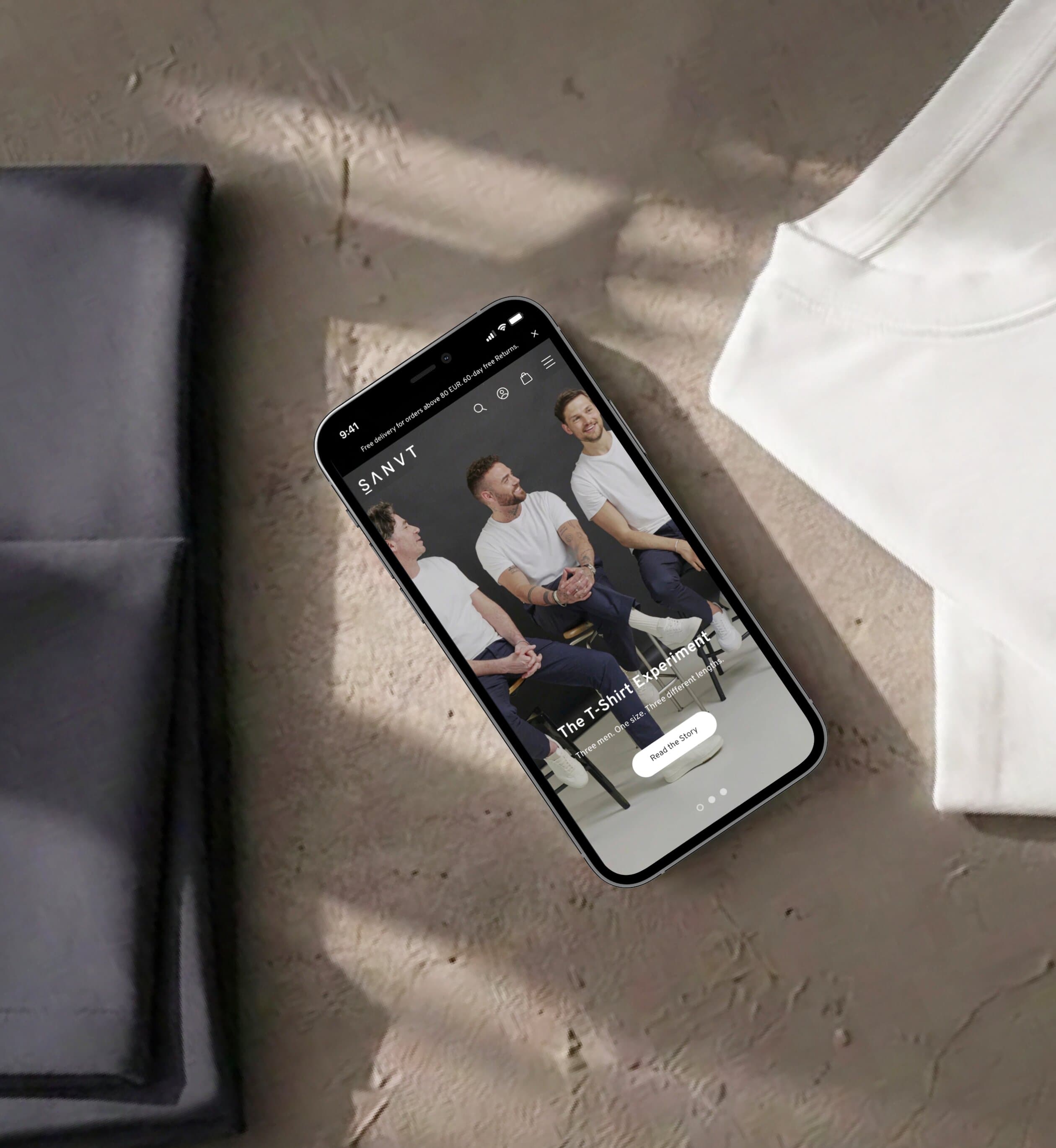
Sanvt.COMFashion
Building a premium shopping experience for growing modern essentials brands
Custom Design, Theme & App Development + Migration
Changing from our shop-system to Shopify was initially rather worrying. However, Mark and his team have been outstanding from day 1 to launch. From concept, to UX design improvements (based on our old site), to development and ultimately implementation, we could not have asked for a better partner. Communication and consultation has been always fast and clear. We now launched, but looking forward to continue working with the team at shoplab to develop even more personalised applications for our site. All in all: highly recommended when looking for true Shopify experts.
PUBLISHED 2022
 Benjamin HeydCo-Founder of SANVT
ENIBAS.COMJewelry
Migrating Enibas to Shopify with a premium shopping experience built for future growth
Custom Theme, Bundle Builder & Data Migration
We decided to move from Craft Commerce to Shopify after dealing with ongoing technical issues, slow site speed, and a general loss of confidence in our platform. Speed and reliability were our top priorities, and shoplab delivered on both. Since the migration, our website has been running smoothly without the recurring issues we previously faced, and the site speed has improved significantly. One of our biggest concerns was maintaining the look and feel of our site, as we had been told in the past that Shopify wasn't highly customisable. However, the shoplab team managed to perfectly replicate our previous design.
PUBLISHED 2025
 Anna-Leah LenzCo-Owner of Enibas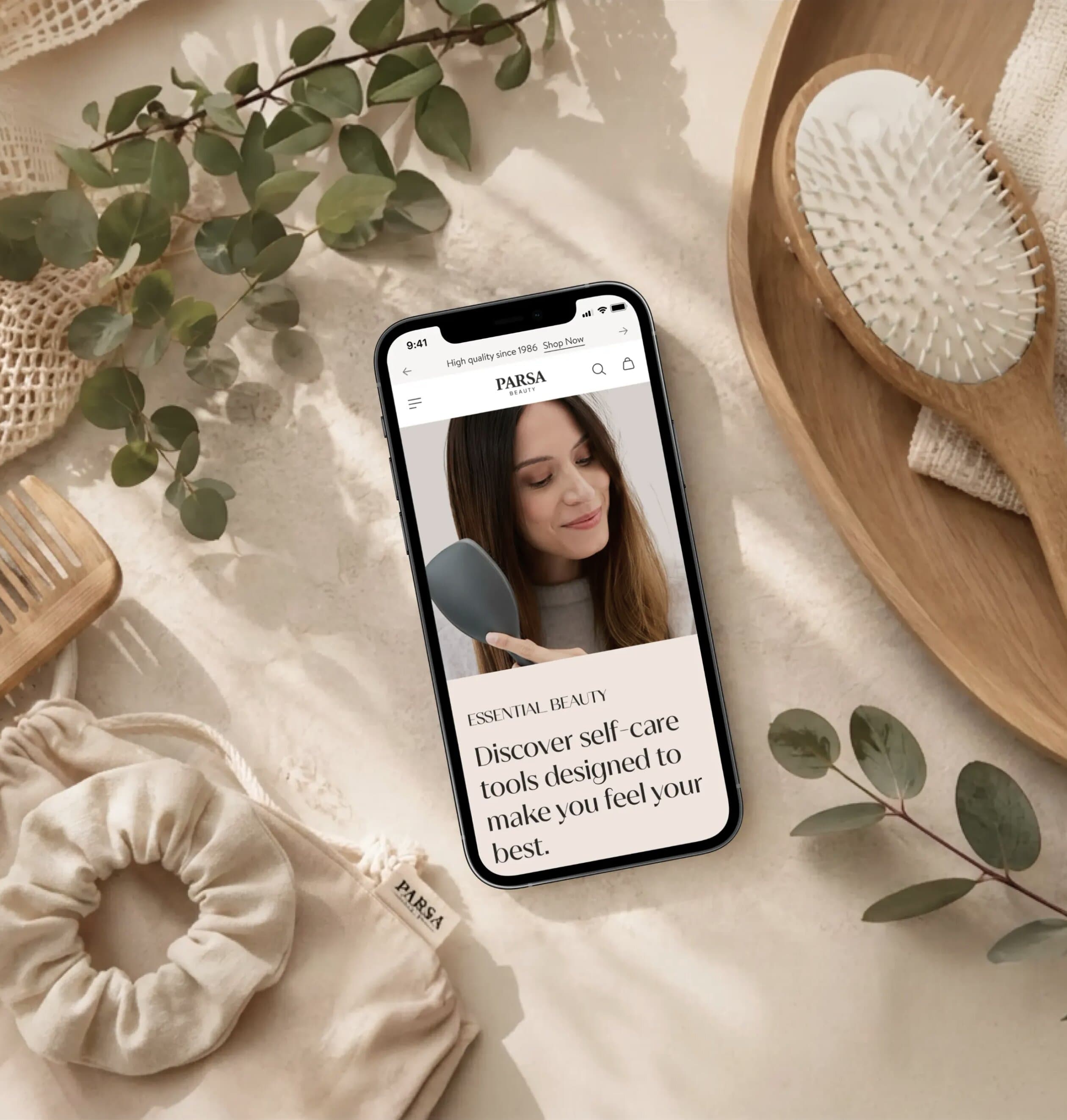
parsa-beauty.deBeauty Accessories
Redesigning the shopping experience for a growing beauty and wellness brand
Custom Design, Theme & App Development + Migration
Working with shoplab was one of the best decisions we made for our online store. They carefully listened to our goals, challenged our ideas in the right ways, and transformed our existing Shopify experience into something that feels far more premium and aligned with our brand. Every stage of the project was well communicated, from strategy and design to development and launch. The final result not only looks beautiful but provides a smoother shopping journey for our customers, and we couldn't be happier with the outcome.
PUBLISHED 2026
 Heiko HoferCEO & Owner of Parsa Beauty
Got questions?
Let's clear things up!
We've gathered the most asked questions with answers to help you better understand our services.


Still have a question?
Let's have a call and clear things up.
Yes. We have worked exclusively with Shopify and Shopify Plus since 2020, and turning down other platforms is what got us here. The trade is deliberate: a team that sees the same platform every day knows which problems have a native solution, which need an app, and which need custom code - so less of your budget goes into rediscovering that. It also means we follow Shopify's own conventions instead of porting patterns over from Magento or WooCommerce, which is what keeps a store upgradeable after we hand it over.
Strategy & consulting, custom Shopify theme development, custom app development, store migrations, UX/UI design, integrations & middleware, ongoing store management, and AI e-commerce readiness. Most projects combine three or four of those: a migration usually arrives with an ERP integration and a redesign attached, and a redesign usually surfaces a performance problem. Everything runs through one team, so a design decision and its development consequence get settled together rather than negotiated between two agencies.
Absolutely, and it is one of the most common ways clients start with us. We audit the current store first - conversion path, page performance, and the templates that carry the most revenue - then redesign against what the audit found rather than against a moodboard. Your products, customers, orders and URL structure stay where they are, so rankings and store data are not at risk. Redesigns can also ship in stages: the pages that sell first, the rest afterwards, so you see the effect before the whole budget is committed.
Yes, from scratch rather than by reskinning a marketplace template. A custom theme means the sections your merchandising team actually needs, editable in the theme editor without a developer, and no inherited code for features you will never use. That last part is the performance argument: off-the-shelf themes carry the union of every use case they were sold for, and you pay for it in Core Web Vitals on every page load. We build against your catalogue and your content model, then hand over documentation so your team can run it.
Yes - WooCommerce, Magento, Shopware and other platforms, in a staged, low-risk process. Products, variants, customers and order history come across, and every indexed URL gets a mapped 301 so the rankings you already earned survive the move. What decides the timeline is rarely catalogue size: it is data structures with no direct Shopify equivalent (bundles, configurable products, customer-specific pricing) and the systems your store talks to. We inventory both before a cutover date is set, which is why our migrations do not end with a redirect list written the night before launch.
It depends on scope: focused improvements often take 4-6 weeks, while full custom builds or migrations typically run 8-16 weeks. A store moving onto a configured theme is usually live in 4-8 weeks; a fully custom storefront runs closer to 10-16. You get a timeline with defined milestones before we start, and those milestones are staged releases rather than one launch date at the end - so a delay in one area does not push everything behind it. What moves a timeline most is late scope additions and integrations nobody inventoried at the start.
Always. We design mobile-first because that is where most e-commerce traffic sits, and where most of the conversion loss happens. Every store is tested on real devices rather than a resized browser window, and measured against Core Web Vitals - largest contentful paint, interaction latency, layout shift - before it goes live. Image handling, font loading and third-party scripts get the most attention, because apps are usually what turn a fast theme into a slow store. Performance is a launch requirement here, not a follow-up ticket.
Yes. Store management plans cover Shopify and app updates, iterative improvements, testing and technical support, on a monthly scope you can adjust as priorities change. Most stores need the first weeks after launch more than they expect: real traffic finds edge cases staging never produced, and the analytics only start telling the truth once volume arrives. After that, ongoing work tends to be conversion iterations on the templates that carry revenue, seasonal campaign support, and keeping the theme current as Shopify ships platform changes.
Definitely, and we will say so when a rebuild is not the right call. We often work in focused iterations - a conversion audit, performance optimization, or redesigning the handful of templates that carry most of the revenue - shipped as staged releases with measurable outcomes instead of a big-bang relaunch. For a store that already converts this is usually the better economics: you keep what works, spend where the data points, and avoid the risk window a full replatform opens. A rebuild earns its cost when the underlying theme or data model is the actual constraint.
Book a free strategy call - about thirty minutes, and you keep whatever comes out of it. We ask what you run today: platform, catalogue structure, connected systems, and what should be better after the project. From there you get a written proposal covering scope, timeline and pricing, with named work blocks rather than one number. If the call shows that what you need is smaller than an agency project, we will tell you that too. It is a cheaper conversation for both of us than finding out in month two.