When deciding which eCommerce platform to build on, or advising a client on a migration, market share data is more than just a number. It shows where developer ecosystems are growing, where enterprise investments are flowing, and which platforms are winning at scale.
Here's a clear overview of where Shopify, WooCommerce, and Magento stand in 2025, and what that specifically means for your business.
The Big Picture: Platform Rankings 2025
Depending on how you measure, the rankings shift - but the pattern remains consistent.
By Number of Stores (StoreLeads, 13.6 million stores recorded):
- WooCommerce: 33.4% market share (4.53 million active stores)
- Shopify: 26.2% market share (4.65 million active stores)
- Magento: approx. 125,000 stores, primarily enterprise-focused
By High-Traffic Websites (BuiltWith, Top 1 Million Sites):
- Shopify: 28.8%
- WooCommerce: 18.2%
- Magento/Adobe Commerce: concentrated in the highest-revenue segments
The key takeaway: WooCommerce leads in pure volume. Shopify leads where the revenue is.
Shopify: The Platform for High Revenue
Shopify is no longer just a platform for small businesses starting their first shop. The platform has firmly established itself in the realm of high-traffic and high-revenue stores.
Key Figures:
- $292 billion GMV in 2024, on track to exceed $350 billion in 2025
- $8.88 billion in revenue in 2024, a 26% year-over-year increase
- Q2 and Q3 2025 each with over 30% growth, among the fastest-growing platforms in the sector
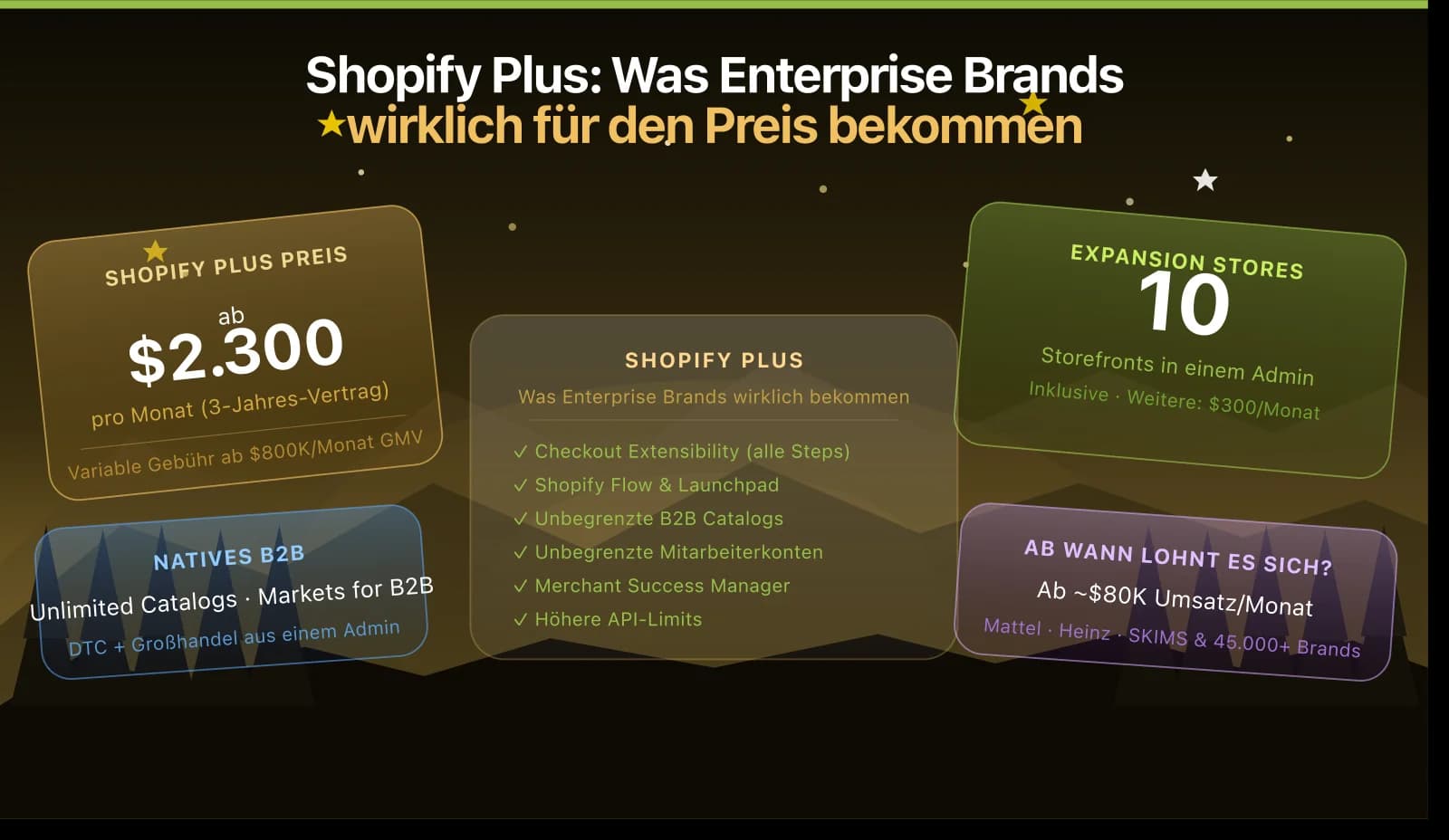
- 76,600+ Shopify Plus Stores, with 300+ new Plus merchants per week
- Forecast: over $12 billion in revenue by 2026
Among the top 1 million eCommerce websites, Shopify and Shopify Plus together hold 30% market share, a number no other platform in this traffic segment comes close to.
For the EMEA region (including Germany), 25-27% of all merchants are on Shopify, with a GMV growth of 42% year-over-year in Q2 2025 alone. Germany is steadily growing through localized payment support and German-language infrastructure.
WooCommerce: The WordPress Giant
WooCommerce dominates by store count, but the comparison requires context.
What the numbers show:
- Powers approximately 6.5 million websites worldwide (including partial installations)
- 4.53 million active stores according to StoreLeads
- 33.4% market share of all recorded eCommerce stores worldwide
- Estimated GMV of $30-35 billion annually, a fraction of Shopify's volume, despite more stores
WooCommerce's strength lies in its deep integration with WordPress, which powers approximately 43% of all websites globally. This makes it a natural choice for content-heavy businesses and cost-conscious merchants. However, for high-traffic websites, it lags significantly behind Shopify, 18.2% compared to 28.8% among the Top 1 Million.
Who chooses WooCommerce:
- Businesses already built on WordPress
- Cost-conscious merchants who prioritize flexibility over simplicity
- Content-first brands that combine editorial and commerce content
Magento (Adobe Commerce): The Enterprise Specialist
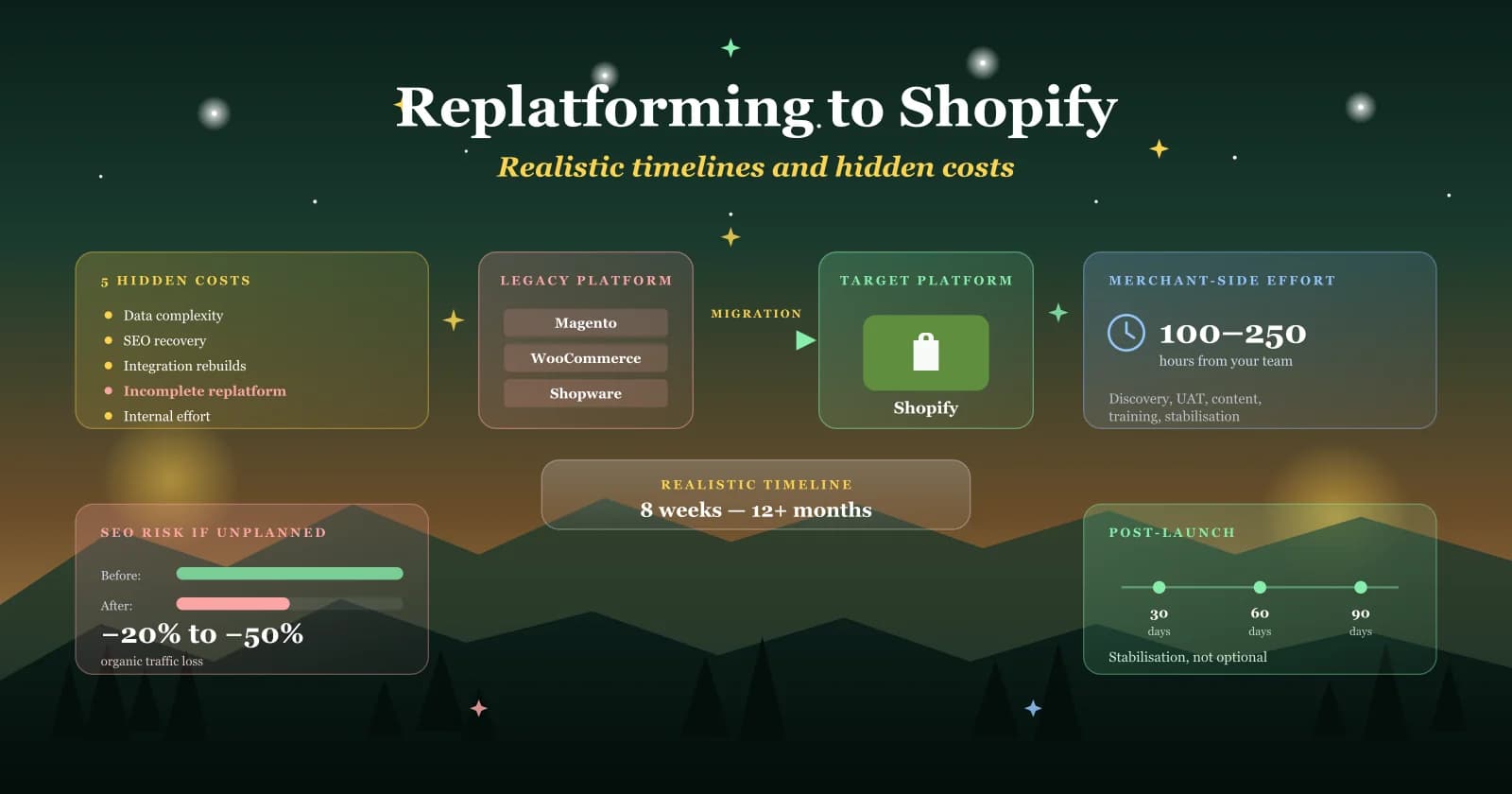
Magento operates in a completely different market segment, and that is by design. Learn more about migrating from Magento to Shopify.
Where Magento stands:
- Approximately 125,000 active stores worldwide (StoreLeads)
- ~8% of the global eCommerce market (Open-Source and Adobe Commerce combined)
- 18% market share in Europe, on par with WooCommerce in the region
- Germany leads with a 19.4% share of all online shops using Magento
- Strong in the UK, Netherlands, and Germany, where enterprise requirements for B2B, ERP integration, and multi-language commerce are most complex
Magento's lower store count does not reflect weakness - it reflects its positioning. These are typically larger, more complex deployments with higher average order values and deeper customization needs.
Who chooses Magento:
- Enterprise merchants with complex catalog or B2B requirements
- Businesses requiring deep ERP/CRM integrations
- Developers building highly customized checkout and catalog experiences
Head-to-Head: What the Data Really Shows
| Shopify | WooCommerce | Magento | |
|---|---|---|---|
| Global Store Share | 26.2% | 33.4% | ~1-8% (depending on source) |
| Share of High-Traffic Sites | 28.8% | 18.2% | Top Revenue Segments |
| GMV 2024 | $292 billion USD | ~$30-35 billion USD | Not publicly reported |
| Best Suited For | Growth, scaling, simplicity | Flexibility, WordPress users | Enterprise, complex builds |
| Hosting | Yes (hosted) | No (plugin) | No (self-hosted) |
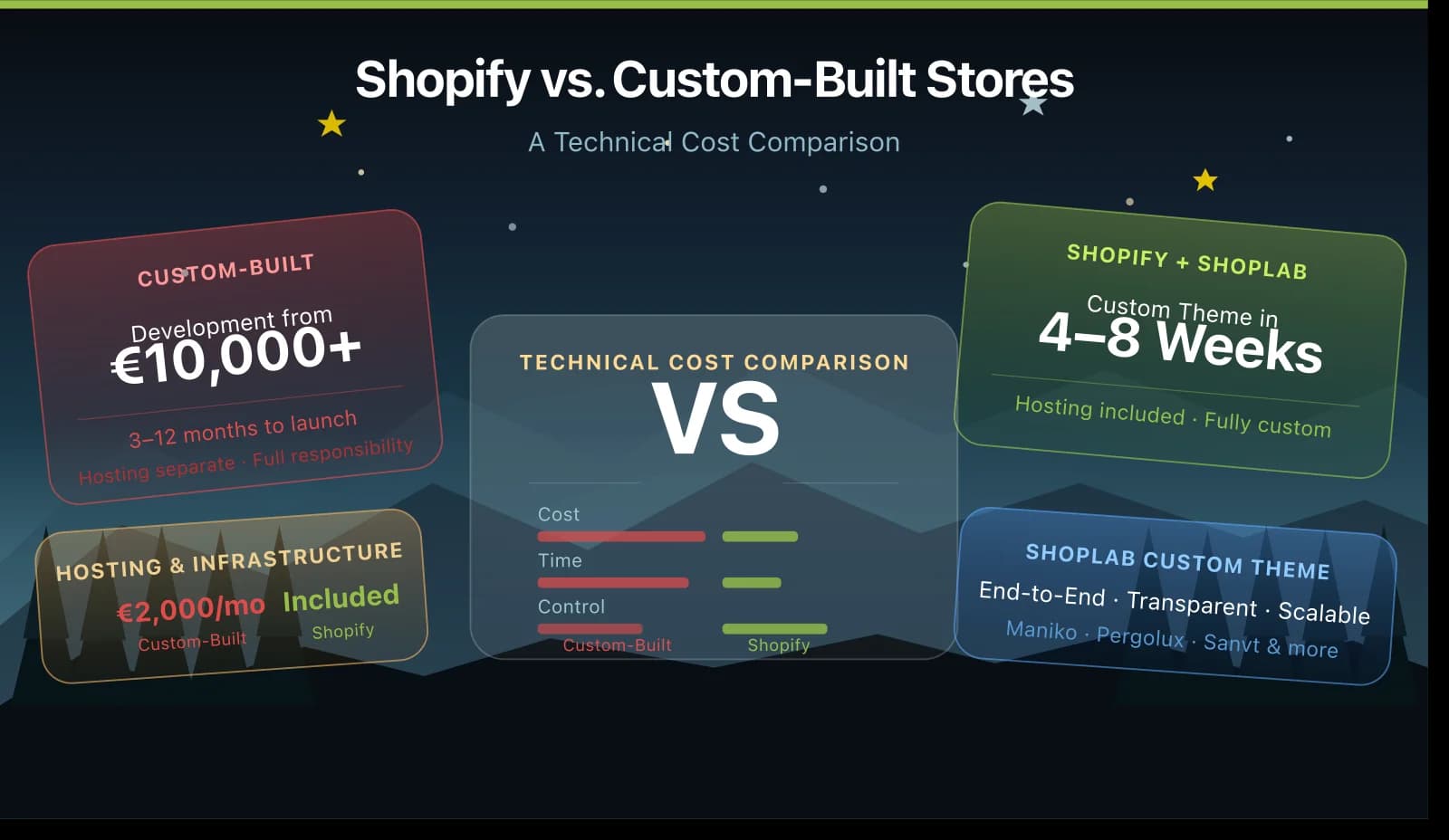
| Entry Costs | From $39/month | Free plugin, variable hosting | Free (open-source), high developer costs |
What This Means When Choosing a Platform
The data is clear:
- If you are growth-oriented and want to spend less time on infrastructure, Shopify is the strongest choice, supported by rapidly growing GMV, a thriving app ecosystem, and continuous platform investments.
- If you are building on WordPress and need tight content-commerce integration at a lower cost, WooCommerce remains a viable option, especially for SMEs.
- If you operate a complex enterprise business with custom B2B workflows, multi-warehouse logistics, or deep ERP requirements, Magento/Adobe Commerce continues to hold a strong position, especially in Germany and the DACH region.
Which of the three fits your business model is rarely a purely technical question - that is exactly what our strategy consulting is for.
That a move away from a CMS-driven store works out is shown by enibas, whom we brought from Craft CMS to Shopify.
Conclusion: Shopify Wins Where It Counts
Pure store counts are a misleading metric. What matters is where the revenue is, where platform investments are flowing, and where the ecosystem is growing fastest.
By these measures - GMV, share of high-traffic sites, enterprise expansion through Shopify Plus, and double-digit revenue growth - Shopify is the platform setting the direction in 2025 and beyond.
For merchants considering migrating from WooCommerce or Magento, the trend lines are clear. And for agencies and developers, the Shopify ecosystem continues to offer the most commercially active environment to build within.