Migration costs
What a Shopify migration really costs
Anyone who names a price before seeing your store is guessing, and you will pay for the guess later. This page explains what actually drives a migration budget, where projects get expensive, and how we arrive at a fixed quote you can plan with.
The cost drivers
Four things decide the budget, and none of them is catalog size
Ten thousand simple products migrate faster than three hundred configurable ones. What makes a migration cheap or expensive is complexity: how your data is structured, what your store is connected to, and how much of your traffic arrives through URLs that must keep working.
Data complexity, not data volume
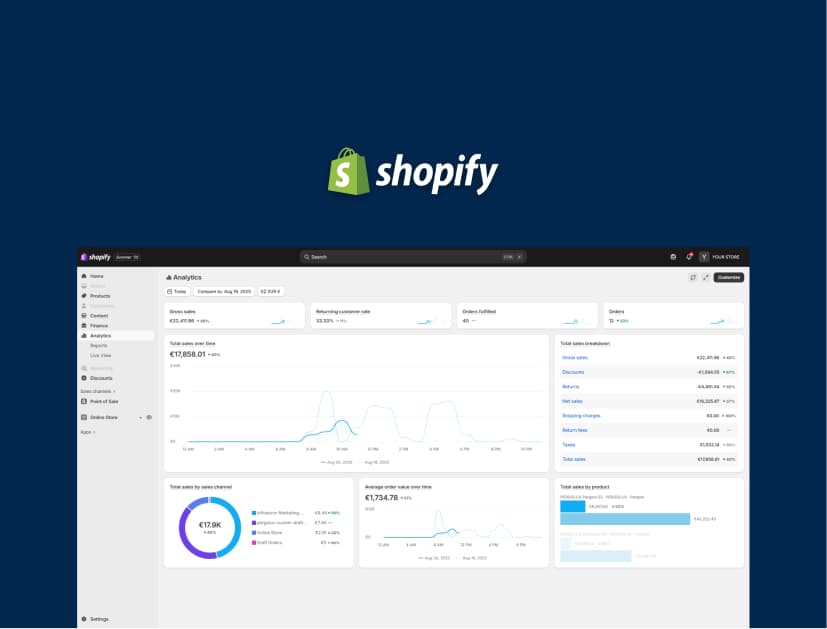
Custom attributes, bundles, configurable products, customer groups and tier pricing all need a decision about what they become on Shopify. Every structure without a direct equivalent adds mapping work. Plain products and plain customers barely register in the budget.
The systems your shop talks to
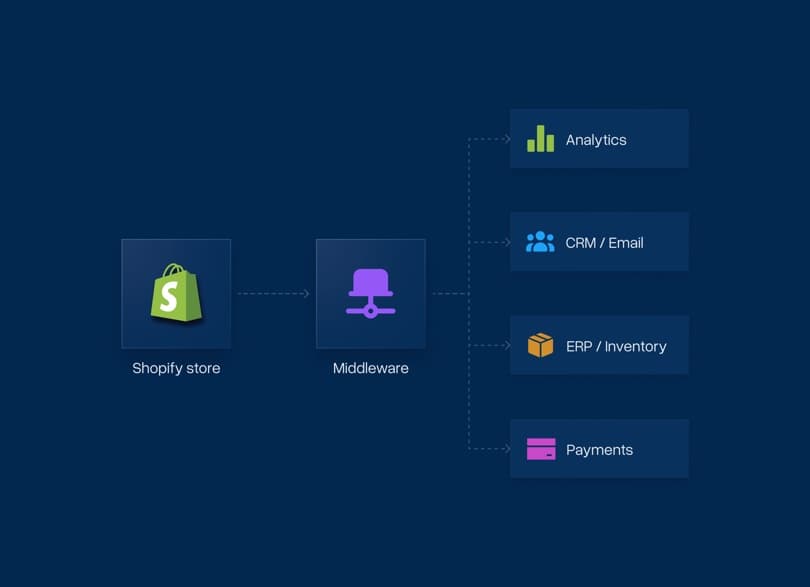
ERP, inventory management, invoicing, newsletter tools, marketplaces. Each connection either has a ready Shopify integration, needs middleware, or needs custom work. The integration list is usually the second biggest line in a migration budget, and the one merchants forget to mention first.
How much storefront you want
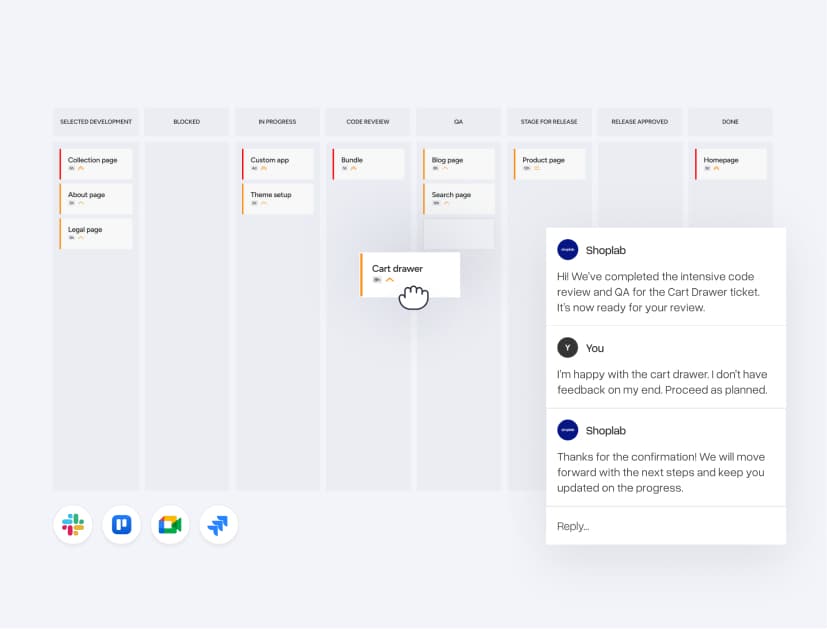
Moving into a configured standard theme costs a fraction of a custom build. Between those two poles sit most real projects: a custom design for the pages that sell, standard patterns everywhere else. Deciding this consciously is the single biggest lever you have on the total.
Your redirect and SEO surface
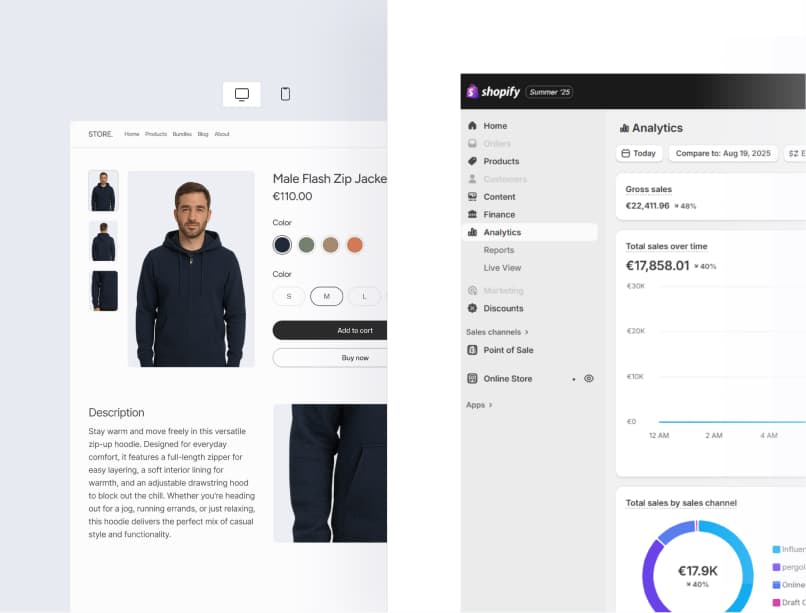
If organic traffic matters to you, every indexed URL needs a mapped 301 and the on-page structure behind your rankings needs to survive the move. A store with years of content and rankings carries a bigger redirect surface than a young store, and the budget reflects that.
From question to quote
How we turn "what does it cost" into a number
We do not price migrations from a form. We look at the store first, because the store is where the budget hides. The scoping itself costs you nothing and you keep the findings either way.
A call about your store, not our pitch
Thirty minutes on what you run today: platform, catalog shape, the systems connected to it, what should get better after the move. You leave this call knowing whether a migration makes sense at all.
The audit that makes the number honest
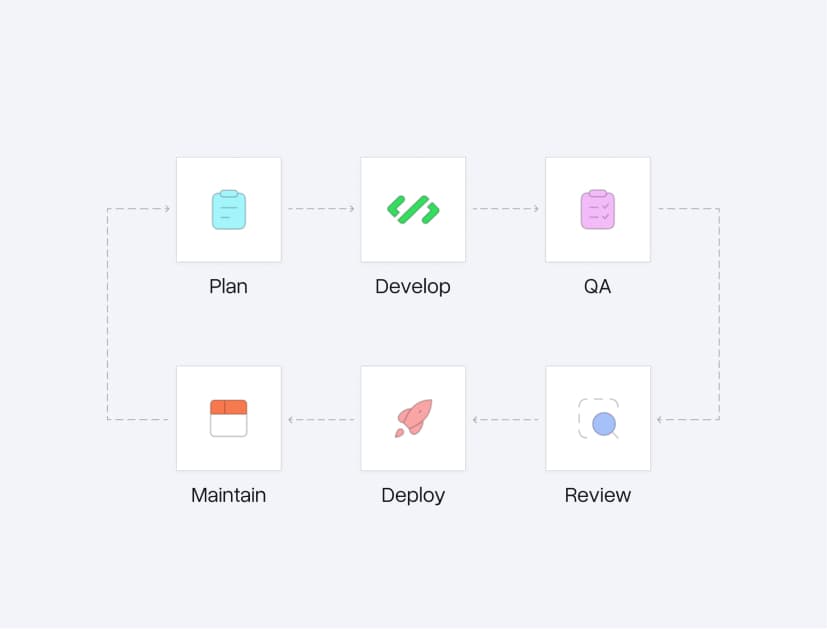
We inventory your data structures, extensions and URL surface. This is where hidden costs stop being hidden: the audit surfaces exactly the complexity that would otherwise appear as a surprise invoice in week six.

A fixed quote with its contents visible
You get a scope document that says what moves, what gets rebuilt, what gets dropped, and what each block costs. Nothing is priced as "to be determined". If a position is uncertain, we say so and price the certainty first.

Change handled in the open
When scope moves mid-project, and in real projects it sometimes does, the change gets its own small quote before any work starts. The original number does not quietly grow. That discipline is what makes a fixed price fixed.
Trusted by brands worldwide
Great brands that we help build and scale their businesses
We believe strong client relationships deliver great results, helping businesses scale with stronger conversions and sustainable growth.






Migration cost FAQ
The budget questions merchants actually ask
Straight answers about how Shopify migration pricing works, without a number invented before anyone has seen your store.


Want a real number?
Let's scope your store.
It depends on four things: how complex your data structures are, how many systems your store is connected to, how much custom storefront you want, and how large your redirect and SEO surface is. Two stores with identical catalog sizes can sit far apart on budget because of those four. That is why we audit before we quote, and why the quote is then fixed.
Because a published number would either be padded to cover the worst case, which overcharges simple projects, or set low to win contacts, which turns into change requests later. Both are common in this market. We would rather spend thirty minutes looking at your store and give you a number that survives the project.
Migrations are fixed price on a written scope. The audit before the quote is what makes that possible: we price known work, not hope. Time and material only enters for genuinely open-ended work you ask for after the store is live, like ongoing development.
Your Shopify or Shopify Plus subscription, payment provider fees, and the apps that replace parts of your old stack. In the scope document we list which apps we recommend, what they cost monthly, and where a native Shopify feature makes an app unnecessary. Most stores end up with a shorter app list than the extension list they left behind.
Almost always in the parts nobody inventoried: an ERP connection that turns out to be custom, product data that lives half in the shop and half in spreadsheets, or URL structures nobody mapped. Every one of those is findable in an audit before the price is set. Surprises are a scoping failure, not a law of nature.
Ask each one what happens to your customer accounts, your order history and your indexed URLs, and where those items appear in their quote. A quote that does not mention redirects or reconciliation is not cheaper, it is incomplete. Compare the described scope, not the bottom line.
Related
The pages that answer the next question
How we migrate, what to prepare, and the platform-specific routes to Shopify.

Martin Winkler
Co-Founder & CEO
Mark Chang
Founder & CTO