Summer of '22 is no exception when it comes to showcasing a number of new features Shopify has been working on. The event is part of Shopify Editions, a collection of product updates for all Shopify products. We too are excited about the announced changes and would like to share our thoughts on the highlights of the event with you.
Shopify Audiences

Image © Shopify
Customer acquisition and targeting have always been known issues from a brand perspective. Shopify wants to change that with its new feature called Shopify Audiences. With the powerful machine learning tool, you now decide to create a network of shared audiences across different websites. Basically, this means shops can now share audiences to target the perfect customers for your brand and reduce the cost of conversions.
Facebook and Instagram ads are currently supported, but more platforms are planned to be included in the near future. Even though this feature is only available for Shopify plus, it could be of great help in finding targeted audiences and better scaling stores.
More information : Shopify Audiences
Shop cash
Shoppers using the Shop app rejoice because this year Shopify plans to give away millions of dollars in Shop Cash rewards. This is also a great opportunity to attract new customers who are already using the app by creating offers and promoting your brand on your platform.
This feature is still in its early stages and you can apply on the official Shopify website.
More information : Shop Cash Boosts on Shopify
Finding customers
The above features are accompanied by a variety of apps aimed squarely at improving targeting. These include Twitter Shopping, which now lets you feature products right on your Twitter profile, and Dovetale, your one-of-a-kind affiliate marketing manager. With it you can send gifts and samples, build new relationships and track your sales.
Sources:
Dovetale in the Shopify App Store
(The Twitter Shopping app is no longer available in the Shopify App Store.)
B2B on Shopify
Say goodbye to complicated spreadsheets and countless hours creating the perfect spreadsheet for your B2B business.
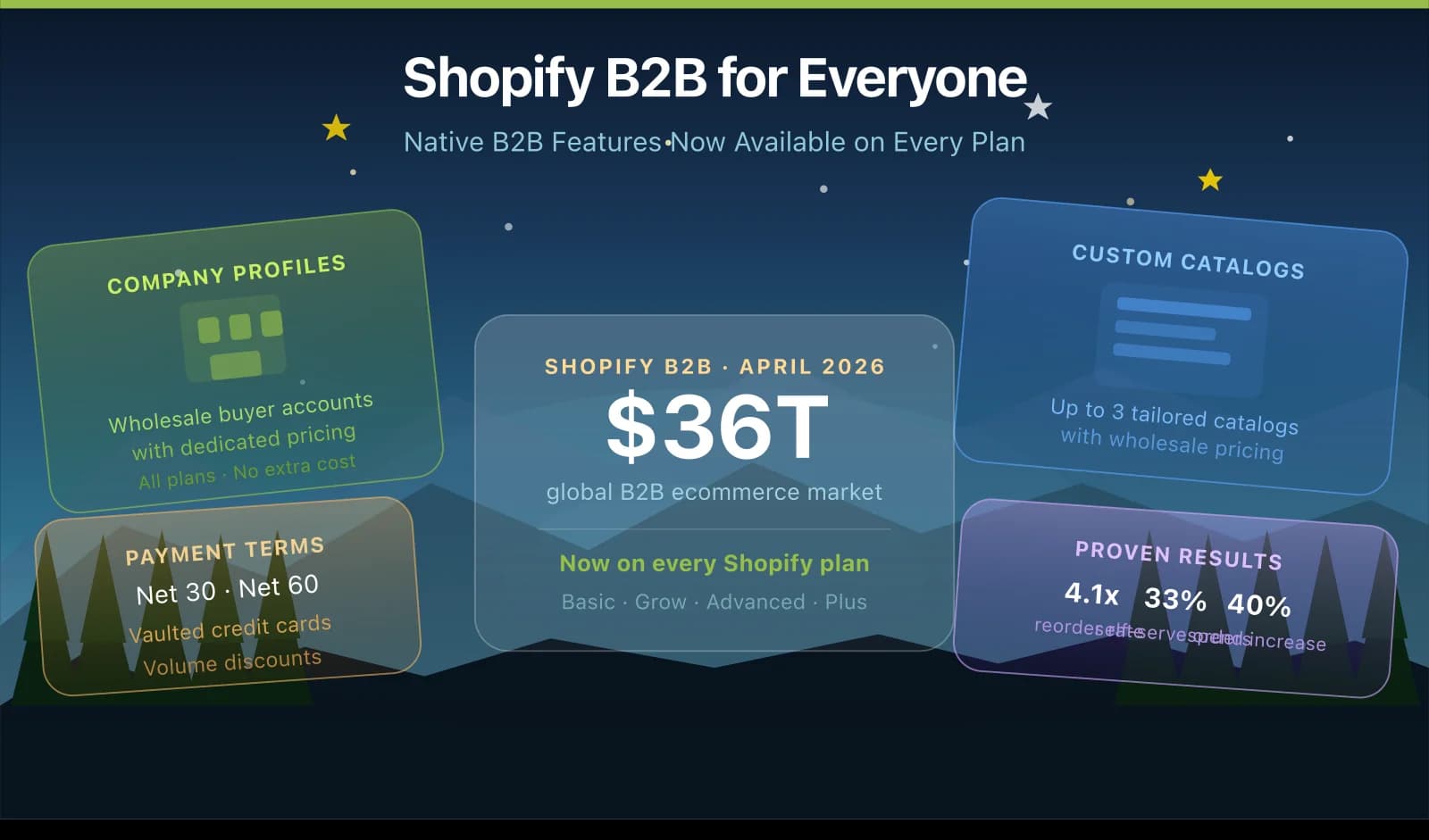
Shopify now integrates everything directly into the admin interface without the need for a third party. Mapping that into your theme and your processes is part of our Shopify development work. You can now wholesale and sell direct from a single shop, set custom prices for wholesale buyers, and use the new interface to easily manage your connections. The best part is that it can even be extended with specific apps, leaving room for improvement as developers come up with new ideas.
More information : B2B on Shopify
Tap to pay on iPhone (US Only)
“Tap to Pay on iPhone is a new payment feature that lets you use contactless credit and debit cards, as well as digital wallets like Apple Pay, without any additional hardware. Powered by Shopify Payments, you can use your iPhone and accept payments anywhere your customers are."
This is an improvement on the Shopify POS and makes it easier for stores to leverage physical retail. Whether it's an event, market or festival, shops can now open a temporary retail location and take advantage of this payment method.
More information : Shopify POS
Shopify Markets

Image © Shopify
Shopify Markets is a new global conversion hub released by Shopify. With insights from nearly a billion orders, this platform estimates business growth of around 40%. If you want to boost your international business, this is the right place to find new ways to scale and connect with new customers.
More information: Shopify Markets
New ways to convert buyers
Last but not least, the Shopify checkout has been enhanced. That means you can now use apps to change the checkout process and add branding, loyalty programs, featured products, and more. This feature is exclusive to Shopify Plus and promises full security and speed.
Another topic of conversation is the new and flexibly integrated Buy It Now payment feature for Shop Pay, which now benefits from full fraud protection for US customers.
Finally, you can now combine discounts for the same order, making it easier to convert customers and increase your sales. Scheduled for release in a few weeks, this feature allows you to get creative and find the perfect combination of products for your customers.
Purchase Options
It all comes down to choosing the right app for your store, because Shopify has now released a number of apps that support pre-orders, subscriptions, and try-before-buy. Variety is important, and preparing for a product release can make a significant difference to your customers.
More information : purchase option apps in the Shopify App Store
Hydrogen & Oxygen

This is good news for customers and developers, because development just got easier. With a React-based framework developed by Shopify, businesses now have the right tools to offer headless ecommerce with pre-existing components, libraries, APIs, and quick deployment options, all hosted on the Shopify platform. What such a setup looks like in practice is covered under headless commerce.
If you want to put these changes to work in your store, your team for that sits at a Shopify agency in Munich.
This update comes along with a bunch of changes to the meta fields that are now more diverse, a pack of 8 new free themes and 10 premium themes and tokengated commerce, for every NFT enthusiast who loves the World Wide Web and eCommerce improve and contribute to well-being.
ShopifyQL Notebooks and Customer Engagement Tools
This section is dedicated to all data scientists who are looking for new ways to analyze business numbers. With a new query language designed for trading, you can now access all data and generate useful statistics from a single interface. You can use existing templates or create your own. Unfortunately, the feature is also tied to Shopify Plus, but used correctly, it can give you a powerful advantage over the competition and help you understand the core principles of shop management.
Accompanying the data collected, Shopify helps with customer engagement tools: email, chat, marketing automations, and segmentation, which allows you to “grow your customer list and capture key customer data with the ability to place forms on any page.” .
More information: ShopifyQL Notebooks and Customer Engagement Tools
We believe the world of commerce is evolving and Shopify wants to be a pillar in this ever-growing world. The featured features are part of an elaborate chain of changes aimed at improving the performance of everyone in this industry.
Some of the features have yet to be unveiled, so here is a list of useful links to the new features:
Finding customers
- Shopify audiences (Shopify plus): published
- Shop cash: early access [ register now ]
- Twitter Shopping (app): no longer available
- Dovetale (app): [ get the app ]
- Linkpop: released [ learn more ]
- Marketplace kit: released [ learn more ]
Convert shoppers
- B2B on Shopify (Shopify plus): released [ sign up now ]
- Shopify Point of sale: released [ try it ]
- Shopify Markets: released [ learn more ]
- Shopify Checkout: released [ learn more ]
- Checkout Extensibility (Shopify Plus): released [ learn more ]
- Shop Pay Enhancements: Released [ Activate Shop Pay ]
- Discounts: published [ learn more ]
- Pre-order Apps: [ Purchase Options ]
Create your story
- Hydrogen + Oxygen: released [ learn more ]
- Tokengated Commerce: early access [ register here ]
- Editor and theme updates: released [ learn more ]
- New metafields: released [ learn more ]
- Search & Discovery App: early access [ register ]
Build Relationships
- ShopifyQL Notebooks: early access for partner stores [ learn more ] - official release coming in the coming months
- Customer Engagement Tools: released [ learn more ]
- New products and features: [ learn more ]
Run your business
- Admin improvements: released [learn more ] - Shopify Fulfillment Network: published [ learn more ] - Shop Promise: Waiting list [ register here ]
- Order and Inventory Management: published [ learn more ]
- Global shipping: published [ learn more ]
- Supplier to Buyer Logistics: published [ learn more ] - Shopify Flow (app): released [ get the app ]
Scale and Build
- Built for Shopify: released [ learn more ]
- Shopify Functions: Developer Preview [ learn more ]
- Data Protection: published [ learn more ] - Shopify Balance: released [ learn more ]
- Shopify Capital: published [ learn more ]
- Planet (app): published [ get the app ]
Check out all the details of the event on the official site: Shopify Editions Summer '22